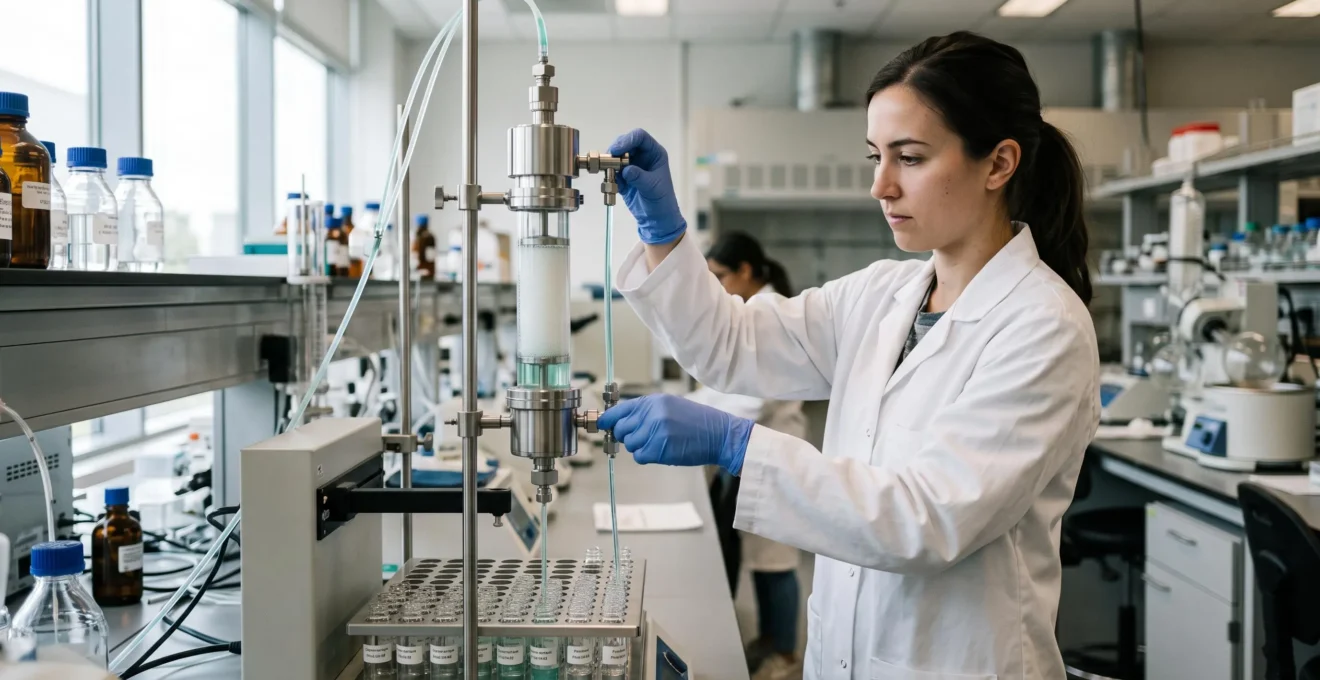
Enzymatic synthesis has become a preferred route for producing complex carbohydrates and glycoconjugates with defined structures, but the value of a well-synthesized glycoproduct collapses if the downstream purification is not designed with equal rigor. Structural similarity between reaction intermediates, glycoform heterogeneity, and the near-absence of chromophores turn what looks like a routine separation into a full process development problem. This article maps the chain from biocatalysis to purified glycoproduct, compares the applicable techniques, and provides a decision framework that scales from milligrams of research material to kilograms of preparative batches — including when and how to outsource the work.
Key takeaways for glycoproduct purification strategy
- Enzymatic synthesis produces defined glycoproducts but generates by-products that are structurally very close to the target, forcing high-selectivity separations.
- The main pain points are structural similarity, glycoform heterogeneity, sensitivity to operating conditions, and weak or absent UV absorbance.
- Ion exchange, size exclusion, affinity chromatography, and membrane filtration are complementary — technique selection depends on charge, size, functionality, and target scale.
- A defensible process is built in three steps: characterize the target, sequence the unit operations, then validate and scale up with the mg → kg trajectory in mind from day one.
- Outsourcing makes sense when internal equipment or scale coverage is missing; verify capabilities with concrete technical criteria, not marketing claims.
Enzymatic Synthesis of Complex Carbohydrates: From Biocatalysis to Glycoproducts
Enzymatic synthesis of complex carbohydrates — also called enzyme-mediated synthesis or biocatalysis — uses purified enzymes, most often glycosyltransferases or glycoside hydrolases operating in transglycosylation mode, to assemble defined glycosidic linkages between activated sugar donors and acceptor substrates. Unlike chemical glycosylation, which requires extensive protecting-group manipulation, biocatalytic routes exploit the regio- and stereoselectivity of the enzyme to place a specific residue at a specific position in a single step, under mild aqueous conditions.
The output of that reaction is what the field calls a glycoproduct: the target oligosaccharide, glycoconjugate, or glycopeptide, together with unreacted donor and acceptor, hydrolysis by-products, enzyme, salts, and — depending on the setup — cofactor regeneration species or whole-cell debris. Downstream processing is the sequence of unit operations that isolates the target from this matrix at the required purity, in a form compatible with the intended use.
Recent reviews on human milk oligosaccharide (HMO) production, such as a 2025 study from Teagasc Food Research Centre and Trinity College Dublin on glycosyltransferases in HMO manufacturing, describe how chemical, enzymatic, and microbial routes coexist industrially, with glycosyltransferases increasingly central to structural control. A separate PubMed-indexed review on enzyme and microbial technology for bioactive oligosaccharides weighs the pros and cons of isolated enzymes versus whole-cell biocatalysts rather than declaring one approach universally superior — a nuance that matters because the choice directly shapes the downstream matrix. Specialized providers such as elicityl-oligotech.com position their offer at this junction between biocatalytic synthesis and downstream purification of glycoproducts.
The point worth remembering before entering the purification chapter: enzymatic routes generally produce cleaner reaction mixtures than chemical synthesis, but “cleaner” does not mean “pure”. The by-products left behind — often regioisomers or truncated glycoforms of the target — are precisely those the separation step will struggle to resolve. This is where structural complexity becomes the fil rouge of every downstream decision.
Why Is Downstream Purification of Glycoproducts So Challenging?
Direct answer: Complex carbohydrates are difficult to purify because reaction by-products differ from the target by a single linkage, position, or monosaccharide unit; glycoform populations are inherently heterogeneous; most carbohydrates lack UV chromophores, which cripples standard optical detection; and many glycoproducts are sensitive to pH, temperature, and organic solvents used in generic chromatography workflows.
Structural similarity and the selectivity ceiling
When an enzymatic reaction produces the target trisaccharide alongside a regioisomer differing only in a 1→3 versus 1→6 linkage, the two species share molecular weight, overall charge, and most physicochemical descriptors. Standard chromatographic modes discriminate on charge, size, or hydrophobicity — none of which resolve isomers whose properties overlap almost completely. The consequence is practical: a generic method transferred from another biomolecule class will typically co-elute the target with its closest by-product and give a chromatogram that looks clean but hides a mixture.
Glycoform heterogeneity and batch variability
Even a well-optimized enzymatic reaction rarely yields a single molecular species. Substrate specificity is not absolute, competing reactions occur, and micro-heterogeneity at the reducing end or at branching points produces populations of closely related glycoforms. This heterogeneity translates directly into batch-to-batch variability, meaning a purification method validated on one batch may perform differently on the next. Any downstream strategy must anticipate this variability rather than assume reproducibility.
The chromophore problem and its analytical fallout
Carbohydrates generally lack aromatic or conjugated structures, so their absorbance in the standard UV range used for chromatographic monitoring is weak or absent. A 2018 arXiv preprint on glucose photodynamics from Cornell University notes that when an analyte lacks a chromophoric subunit, chemical modification is frequently performed to enable detection. In routine purification, this means teams rely on refractive index, evaporative light scattering, charged aerosol, or pulsed amperometric detection — each with its own sensitivity limits, baseline drift, and compatibility constraints with mobile phases. Fraction analysis becomes slower and more expensive than for proteins or nucleic acids.
Sensitivity to operating conditions
Many complex carbohydrates and glycoconjugates tolerate a narrow window of pH, temperature, and solvent exposure. Aggressive elution buffers, prolonged contact with acidic ion exchangers, or high organic content can trigger hydrolysis of labile glycosidic bonds or desialylation of sialylated structures. Every purification decision therefore carries a stability constraint: the fastest resolution is worthless if it degrades the product.
Comparing Purification Techniques for Complex Carbohydrates and Glycoconjugates
No single technique addresses every glycoproduct. The relevant question is which combination of unit operations — chromatographic and membrane-based — matches the compound’s properties and the target scale. Each mode below is characterized by what it separates on, when it applies, and where it falls short for carbohydrate work.
| Technique | Separation basis | Best-fit glycoproducts | Main limitation for carbohydrates |
|---|---|---|---|
| Ion exchange chromatography | Net charge | Sialylated, sulfated, phosphorylated, or acidic glycans | Neutral oligosaccharides are poorly retained; salt gradients require desalting downstream |
| Size exclusion chromatography | Hydrodynamic size | Polydisperse mixtures, polysaccharides, buffer exchange | Low resolution between closely sized species; dilutes the sample |
| Affinity chromatography | Specific ligand recognition (lectins, boronates) | Glycoconjugates with defined recognition motifs | Limited ligand availability for many glycan structures; cost and capacity |
| Membrane filtration / ultrafiltration | Molecular weight cutoff | Concentration, buffer exchange, removal of enzymes and small solutes | Not selective between similarly sized glycoforms |
| Reversed-phase or HILIC | Hydrophobicity / hydrophilicity | Derivatized glycans, small oligosaccharides | Native carbohydrates often too polar for RP; HILIC requires high organic content |
Chromatographic modes: charge, size, and specificity
Ion exchange is the workhorse for charged glycoproducts. Sialylated N-glycans, sulfated glycosaminoglycan fragments, and phosphorylated oligosaccharides are effectively retained on anion exchange resins, with elution controlled by salt gradient or pH shift. Size exclusion chromatography is rarely a primary resolution step for closely related glycoforms — its role is buffer exchange, aggregate removal, and rough fractionation of polysaccharides. Affinity chromatography using immobilized lectins provides a specificity dimension unavailable elsewhere, isolating glycans that carry a particular epitope, but the cost, ligand availability, and limited dynamic capacity restrict it mostly to analytical or small preparative scales.

Membrane and filtration operations
Membrane processes rarely deliver the final resolution but are indispensable as connective tissue in a downstream sequence. Ultrafiltration concentrates dilute post-chromatography pools, exchanges buffer before a subsequent polishing step, and removes residual enzyme after biocatalysis. Nanofiltration and diafiltration handle desalting after ion exchange, sparing an additional gel filtration step. Their main advantage at scale is throughput per unit footprint; their main limitation for glycoproduct work is the absence of selectivity between species of similar molecular weight.
A decision framework for technique selection
- The target carries a charge (sialic acid, sulfate, phosphate):Start with ion exchange chromatography; follow with desalting by ultrafiltration or size exclusion.
- The target differs from by-products mainly in molecular size (polysaccharide, oligomer distribution):Use size exclusion or ultrafiltration cascades with appropriate molecular weight cutoffs.
- The target carries a defined recognition motif and a suitable lectin exists:Consider lectin affinity chromatography for the resolution step, with orthogonal polishing.
- The target and by-products differ only in linkage or position (regioisomers):Expect a multi-step process combining orthogonal modes; single-mode purification is unlikely to suffice.
- Internal equipment or expertise is missing for the required scale:Evaluate outsourcing to a provider with documented coverage of the mg-to-kg range.
How to Define a Purification Strategy That Scales from Milligrams to Kilograms
A purification strategy that scales is not built by starting small and hoping the method transposes. It is designed with the mg → kg trajectory in mind from the first characterization experiment. The three steps below structure that design.
- Characterize the target and the matrixDetermine molecular weight, charge state across the operational pH range, stability window, presence of ionizable or affinity handles, and the profile of expected by-products. Identify which analytical method will monitor purity throughout the process — HPAEC-PAD, HILIC-MS, or another orthogonal combination — since detection reliability shapes every subsequent decision.
- Select and sequence unit operationsCombine orthogonal modes so that each step separates on a different physicochemical property. A typical sequence for a charged oligosaccharide might chain ultrafiltration for enzyme removal, ion exchange for the resolution step, size exclusion or diafiltration for desalting, and a final polishing step. Fewer steps mean higher yield but lower purity; the arbitrage is compound-specific.
- Validate and plan the scale-upAt bench scale, validate yield, purity, and stability across at least three batches to capture glycoform variability. Anticipate scale-dependent constraints: column packing quality, residence time distribution, buffer volumes, and the shift from analytical to preparative detection. Where possible, select resins and membranes available in scale-up formats to avoid changing chemistry between scales.
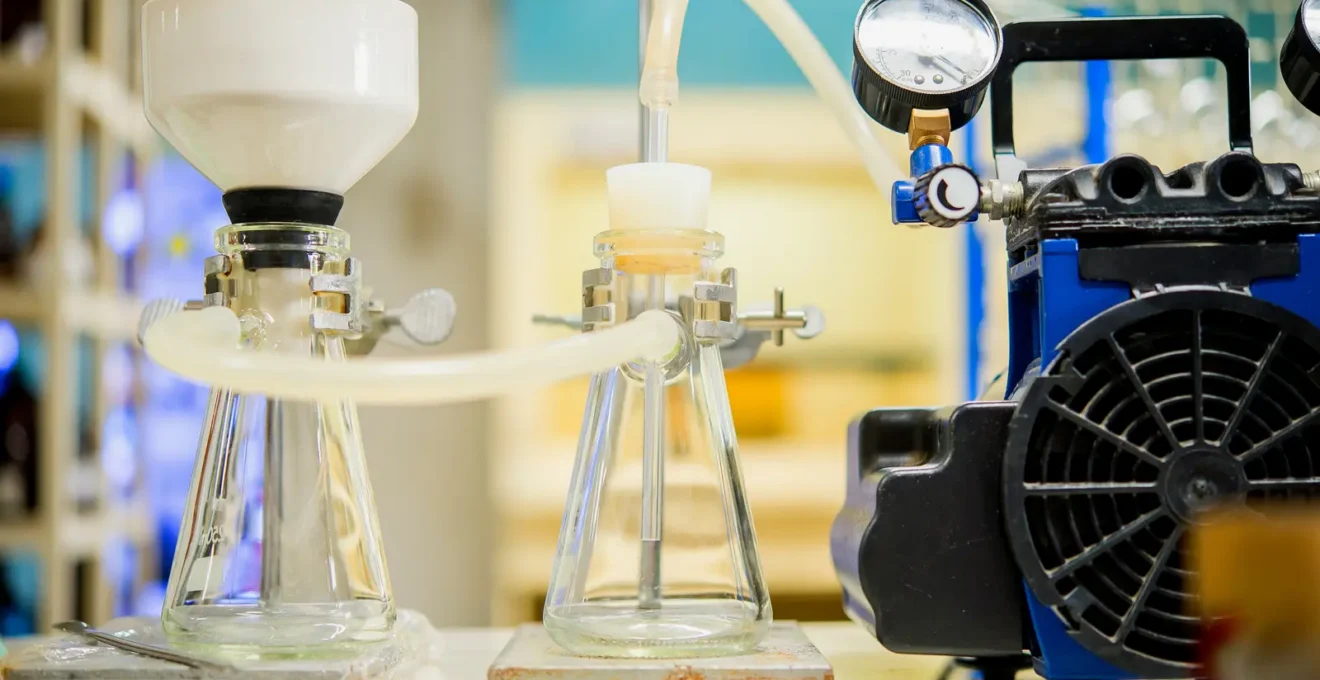
Scale-up rarely proceeds linearly. Moving from a 1 mL bench column to a 10 L preparative column changes residence time, backpressure profile, and heat transfer; membrane processes shift from dead-end to tangential flow with different fouling behavior. Purity and yield established at the mg scale must be re-verified at each intermediate volume, and the analytical method itself may need re-qualification for the higher concentrations and different buffer compositions encountered downstream.
Scale-up warning worth internalizing: a method that gives 95% purity and 80% yield at 100 mg is not guaranteed to deliver the same at 100 g. Resin lot variation, packing quality, and detection sensitivity to concentrated pools can each shift the outcome. Build revalidation checkpoints into the plan rather than assume linear transfer.
Related applications of purified glycoconjugates — including therapeutic strategies such as anticorps conjugués ciblant les cellules cancéreuses — illustrate why kilogram-scale purity requirements now reach beyond classical bioprocessing into targeted therapeutics, reinforcing the need for methods that hold up at scale.
Key Considerations Before Outsourcing Glycoproduct Purification
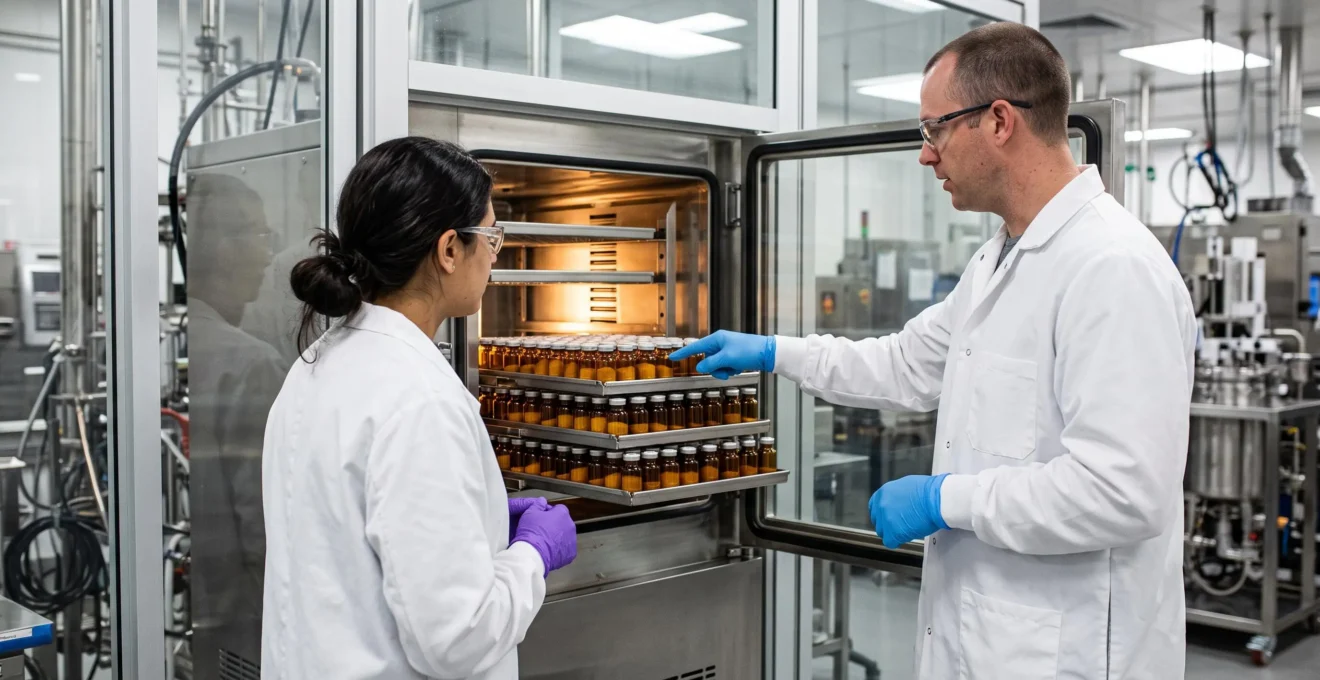
Outsourcing becomes the pragmatic option when internal expertise, equipment, or scale coverage falls short of the target — a common situation in academic labs moving toward preclinical quantities and in industrial R&D teams whose infrastructure was designed for other biomolecule classes. The risk of outsourcing is not the principle but the selection: much of the contract purification market is generic and not specialized in glycosciences, and technical claims can be difficult to verify from a website alone.
Criteria to verify before engagement
Rather than compare marketing statements, translate each provider claim into a verifiable question addressed to the technical team.
- Scale coverage: ask for documented examples of purifications delivered at the milligram, gram, and kilogram scales on carbohydrate substrates — not on proteins.
- Equipment inventory: confirm the availability of ion exchange, size exclusion, and affinity chromatography systems in preparative formats, plus membrane processing for concentration and buffer exchange.
- Analytical capability: verify the presence of detection methods suited to carbohydrates without chromophores (HPAEC-PAD, HILIC coupled to MS, ELSD or CAD), and the ability to characterize glycoform composition.
- Scientific support: assess whether the provider participates in method development discussions or only executes a supplied protocol; specialist input during characterization prevents costly rework later.
- Quality framework: clarify traceability of batches, documentation practices, and — where applicable — the regulatory environment (GMP, non-GMP research use) matching the intended application.
The case for early supplier involvement
Engaging a specialized provider during the characterization phase, not after a purification failure, shortens development time. A supplier that has already resolved similar glycoform mixtures can suggest which mode to try first, which resin to avoid, and what analytical setup will actually monitor the separation. Where the upstream synthesis and the downstream purification are handled by the same integrated team, the reaction can be tuned to simplify the separation — for example by adjusting donor stoichiometry to reduce a specific by-product.
Questions to ask before signing
Cas pratique
An illustrative scenario: an R&D team has produced 200 mg of a novel fucosylated tetrasaccharide by enzymatic synthesis, needs 5 g for preclinical evaluation within four months, and lacks preparative ion exchange capacity. Before committing to a provider, the team asks for a written technical response on four points: (1) which purification sequence is proposed and why; (2) what analytical method will confirm purity at each intermediate step; (3) what scale-up path is envisaged if the preclinical program advances to gram-then-kilogram volumes; (4) which comparable glycoproducts the provider has processed at similar scale. A generalist supplier will typically answer points 1 and 2 confidently but hesitate on points 3 and 4. This scenario is a fictional decision framework, not a documented engagement.
Providers positioned specifically at the intersection of enzymatic synthesis and downstream purification — as communicated by ELICITYL — describe capabilities spanning the mg to kg range with a combined synthesis and purification workflow. Whether such an offer fits a given project depends on the criteria above being demonstrated, not asserted.
How do you purify oligosaccharides that lack UV chromophores after enzymatic synthesis?
Rely on detection methods that do not depend on UV absorbance: refractive index for concentrated samples, evaporative light scattering (ELSD) or charged aerosol detection (CAD) for broader applicability, and pulsed amperometric detection (HPAEC-PAD) for high-sensitivity carbohydrate analysis. For structural confirmation, HILIC or ion exchange coupled to mass spectrometry provides both separation and identification. In some cases, controlled chemical derivatization introduces a chromophore for a specific analytical checkpoint without altering the preparative purification itself.
What chromatographic method separates structurally similar glycoconjugates?
No single mode reliably resolves regioisomers or closely related glycoforms. Effective strategies combine orthogonal separations: ion exchange for charged variants, HILIC for polar interactions, and affinity chromatography when a discriminating lectin is available. The specific combination depends on which physicochemical property actually differs between the target and its nearest by-product.
How do you scale up a carbohydrate purification process from milligrams to kilograms?
Design the bench method with scale-up in mind: choose resins and membranes available in preparative formats, keep buffer chemistry within stable and cost-effective ranges, and document yield and purity across replicate batches to capture glycoform variability. Revalidate at intermediate scales rather than jumping directly from lab to production, and adapt the analytical method to the higher concentrations and volumes encountered downstream.
When is it appropriate to outsource glycoproduct purification?
Outsourcing is appropriate when internal capabilities do not cover the required scale, when the equipment mix (preparative ion exchange, affinity resins, tangential flow filtration, glycan-appropriate detection) is missing, or when the development timeline does not accommodate building expertise from scratch. It is most valuable when engaged early — during characterization — rather than as a rescue step after a failed internal attempt.
The trajectory from an enzymatically synthesized glycoproduct to a purified batch usable at kilogram scale is a process development problem, not a technique selection problem. What separates a workable strategy from a costly detour is the discipline of characterizing the target first, sequencing orthogonal unit operations second, and validating scale-dependent behavior at every checkpoint. When internal resources fall short, the decision to outsource should rest on demonstrated glycosciences experience across the full mg-to-kg continuum — verified through concrete technical exchange, not brochure claims.